FDM or resin printing?
Both are “3D printing”, but they work in completely different ways and solve different problems. The distinction is easiest to grasp through what the part has to do.
6 min read·
How each one works
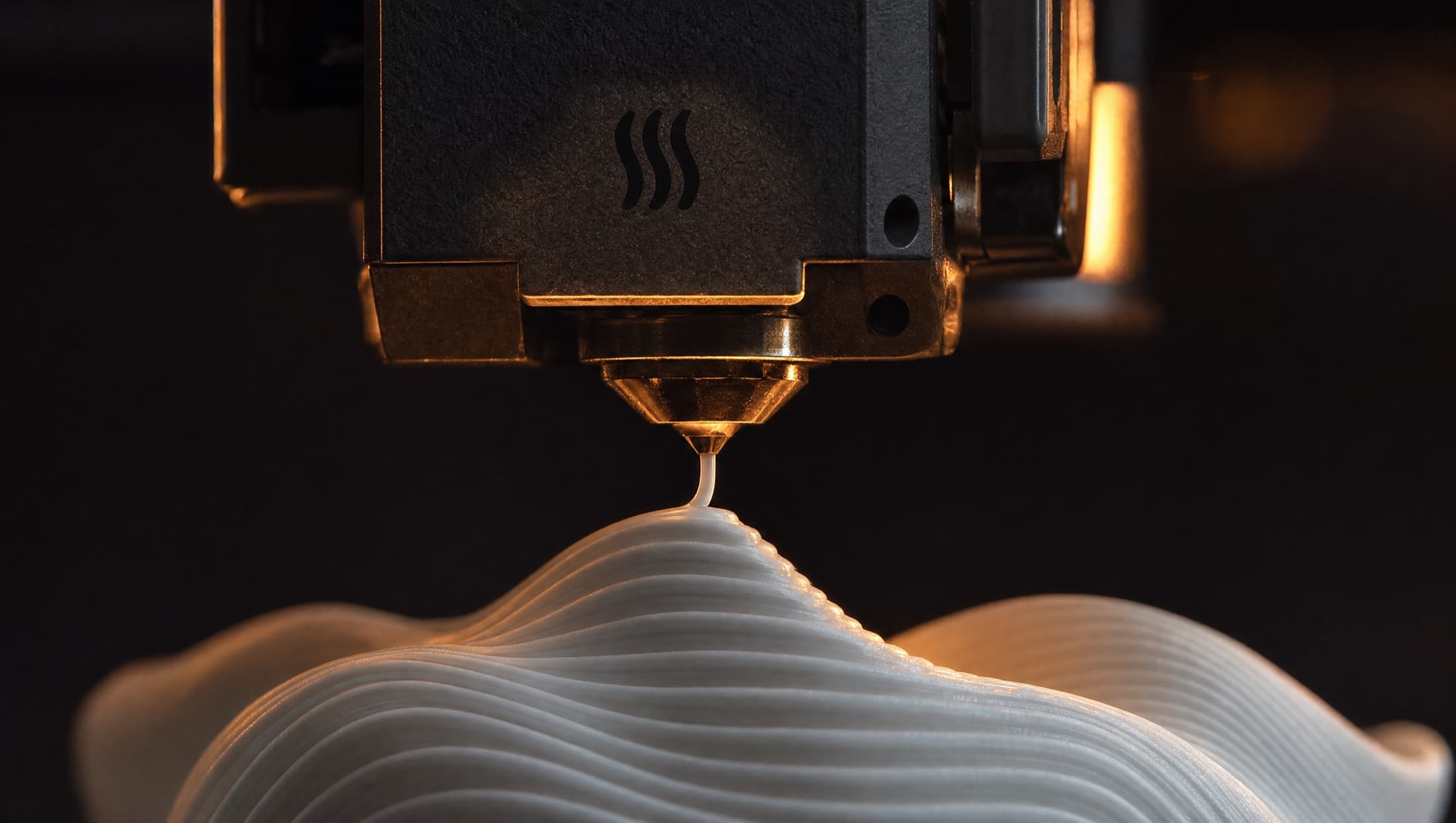
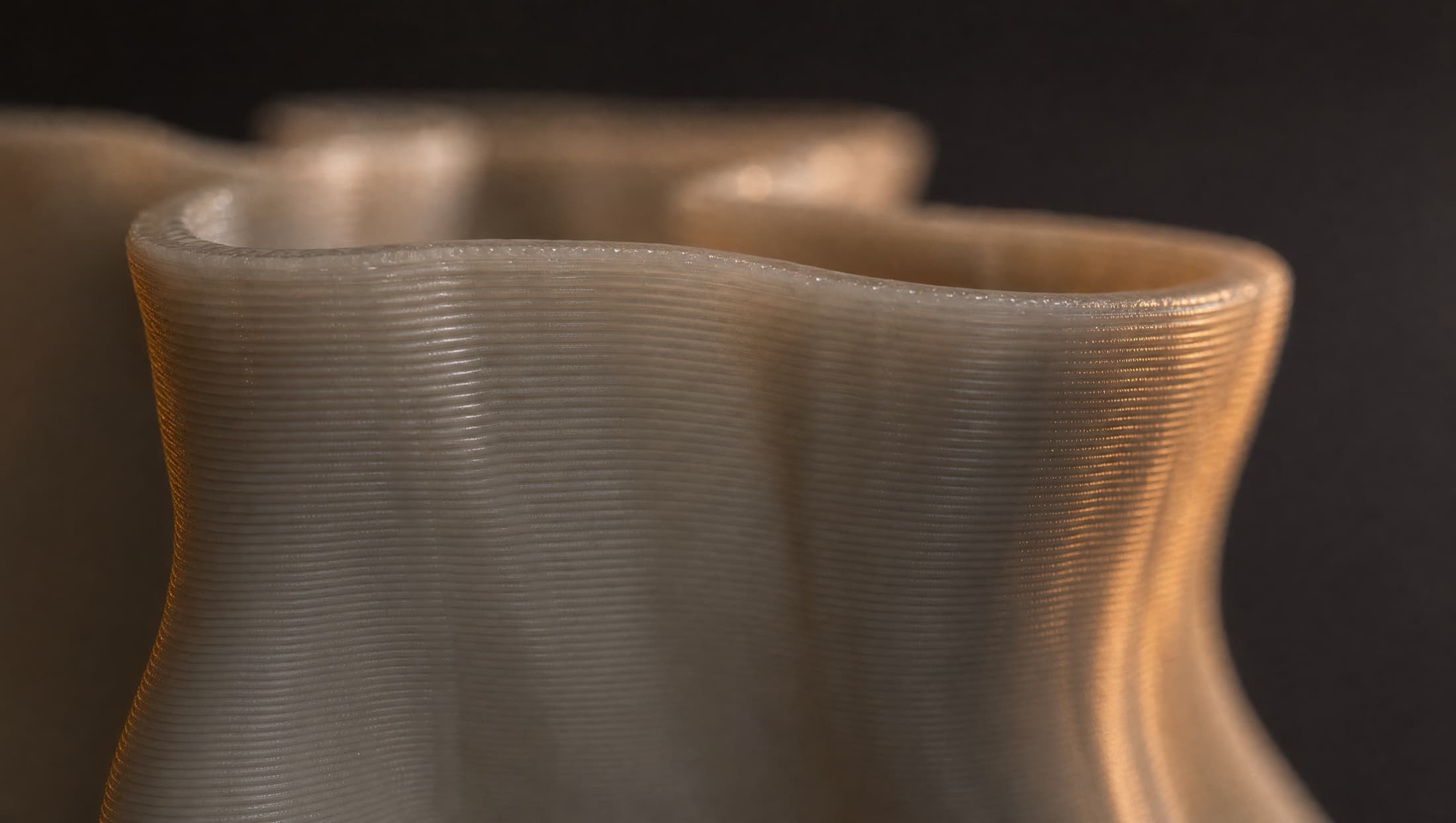
FDM melts a plastic filament and lays it down layer by layer, like drawing with hot glue. The layers stay visible as fine lines, and that is part of the character — on our lamps those very lines make the wave texture and scatter the light.
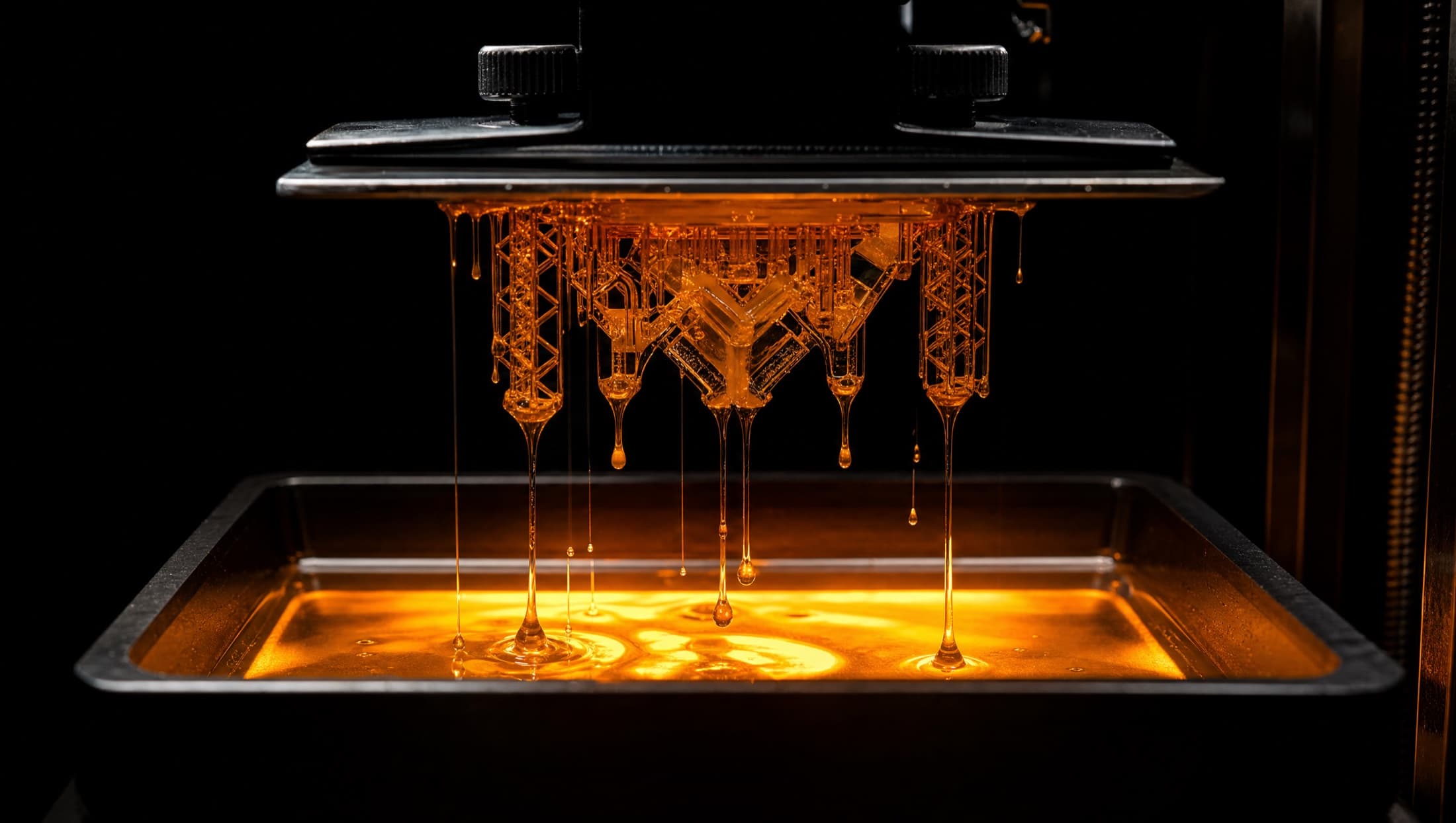
Resin works the other way round: the part is drawn out of a vat of liquid resin that light cures point by point. The layers are so thin they're effectively invisible, so the surface comes out smooth, as if cast.
When to choose FDM
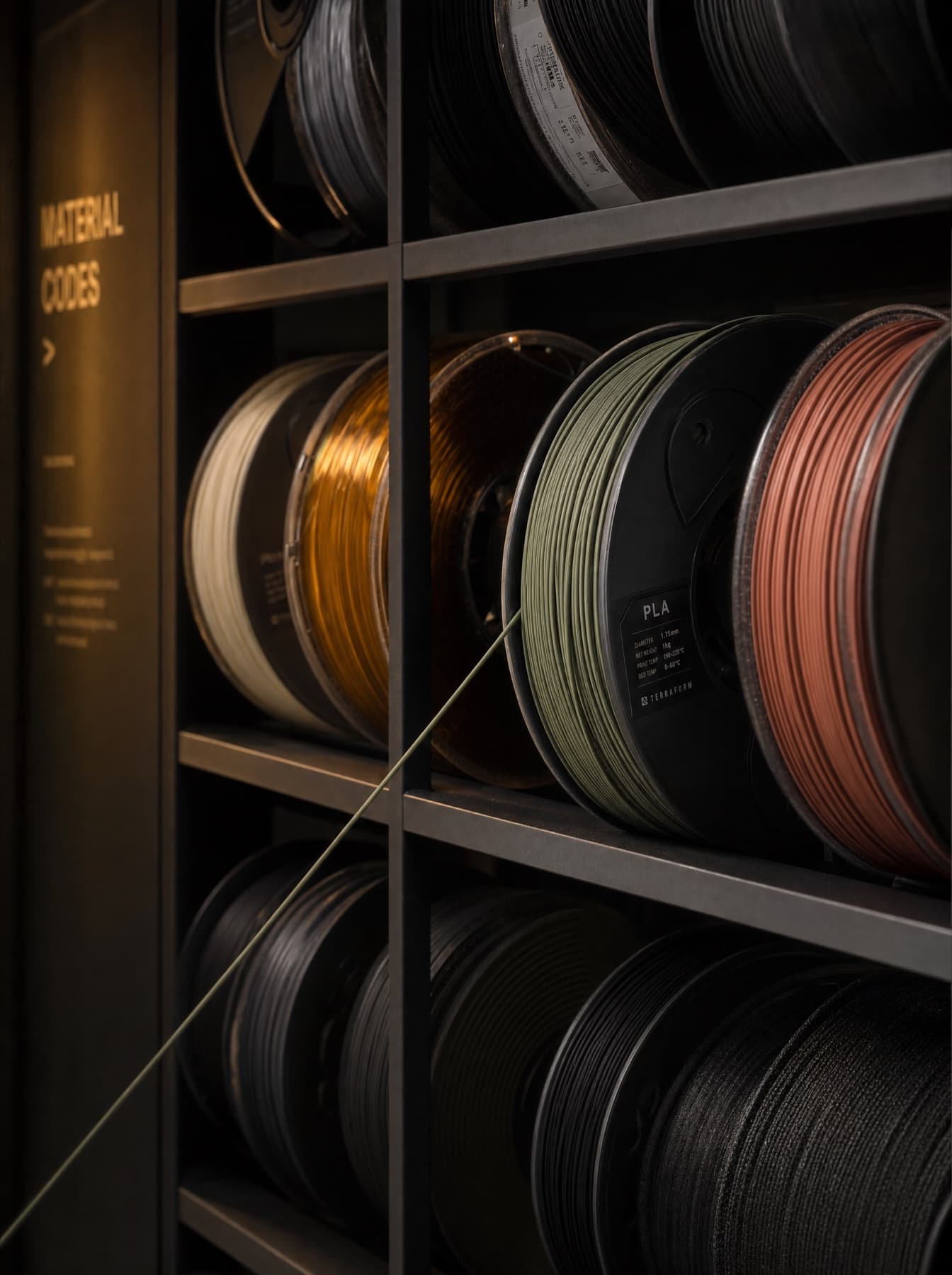
FDM is the answer for almost anything functional. Parts are tougher and survive impact and bending, the build volume is larger so big pieces are possible, the material range is far wider (PLA, PETG, ABS, ASA, nylon, TPU, carbon composites), and it costs considerably less per gram.
In practice: enclosures, brackets, spare parts, prototypes you need to test in the hand, models, décor and anything bigger than your fist — that's FDM. Most of what leaves our studio is printed this way.
When to choose resin
Resin is chosen for detail. Figurines, jewellery, modelling parts, small mechanisms, moulds — anything needing features an FDM nozzle simply cannot produce. If you're holding a part looking for a crisp edge or two-millimetre-tall lettering, resin is the only route.
The price of that precision is its limits: parts are more brittle and snap before they bend, the build volume is smaller, and every piece has to be washed and UV-cured after printing. That's why resin is dearer and slower — and why we use it where it genuinely pays off.
Common questions
- Can a resin part be painted?
- Yes, and it takes paint well — the smooth surface accepts it better than FDM, where the layers show through a thin coat. For figurines and models it's a routine step.
- How do I know which one I need?
- Tell us what the part is for and how big it is — that's almost always enough to make the answer obvious. If it still isn't, we'll quote both options and you choose.
Where to next
Got a project in mind?
Describe what you need and we'll come back with an estimate and a date within 24–48h.
Request a quote