Which filament should you pick?
The material decides whether a part survives the job you give it. Here's the short version — organised by where the part ends up, not by datasheet.
7 min read·
PLA — for anything that lives indoors
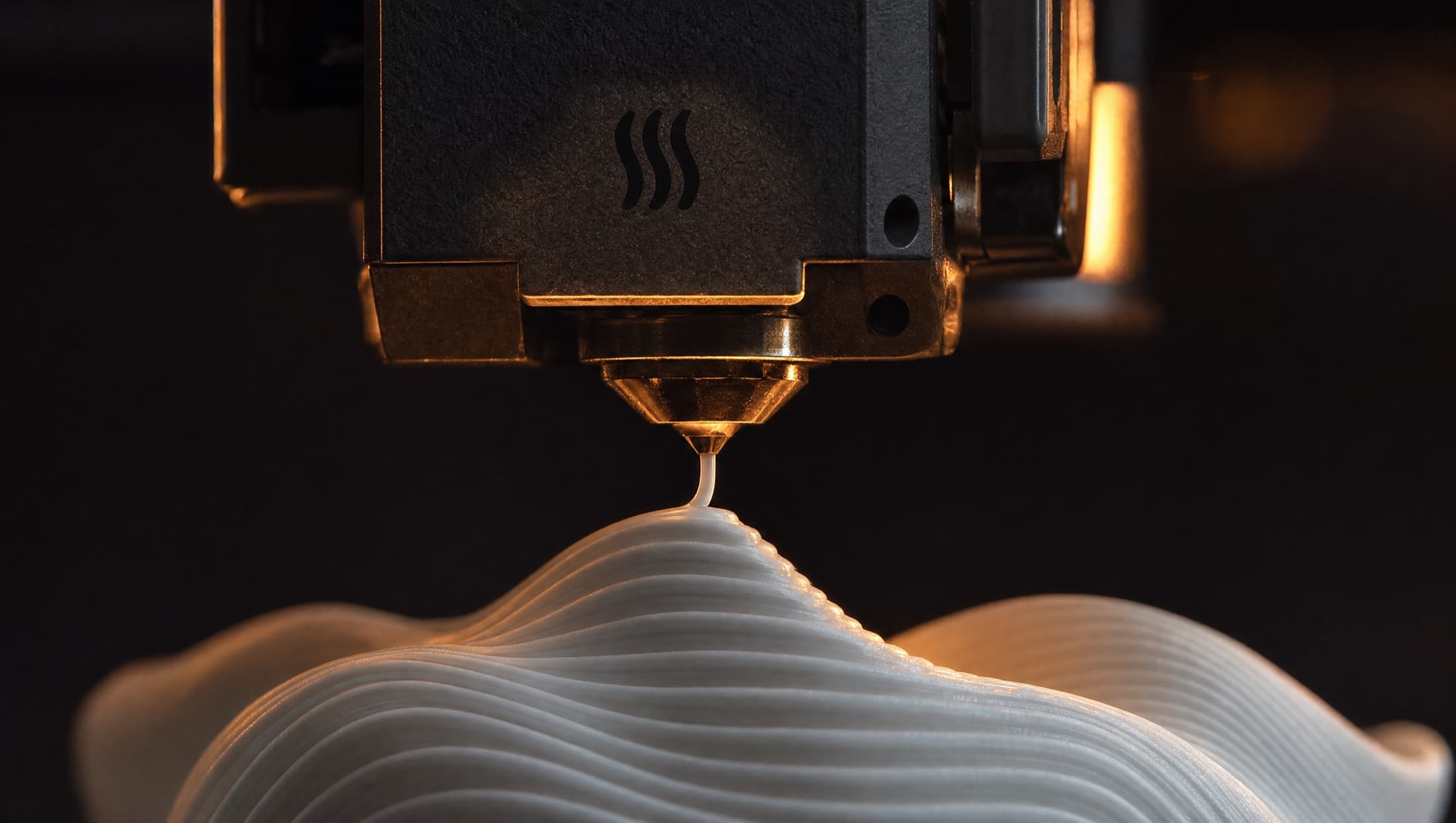
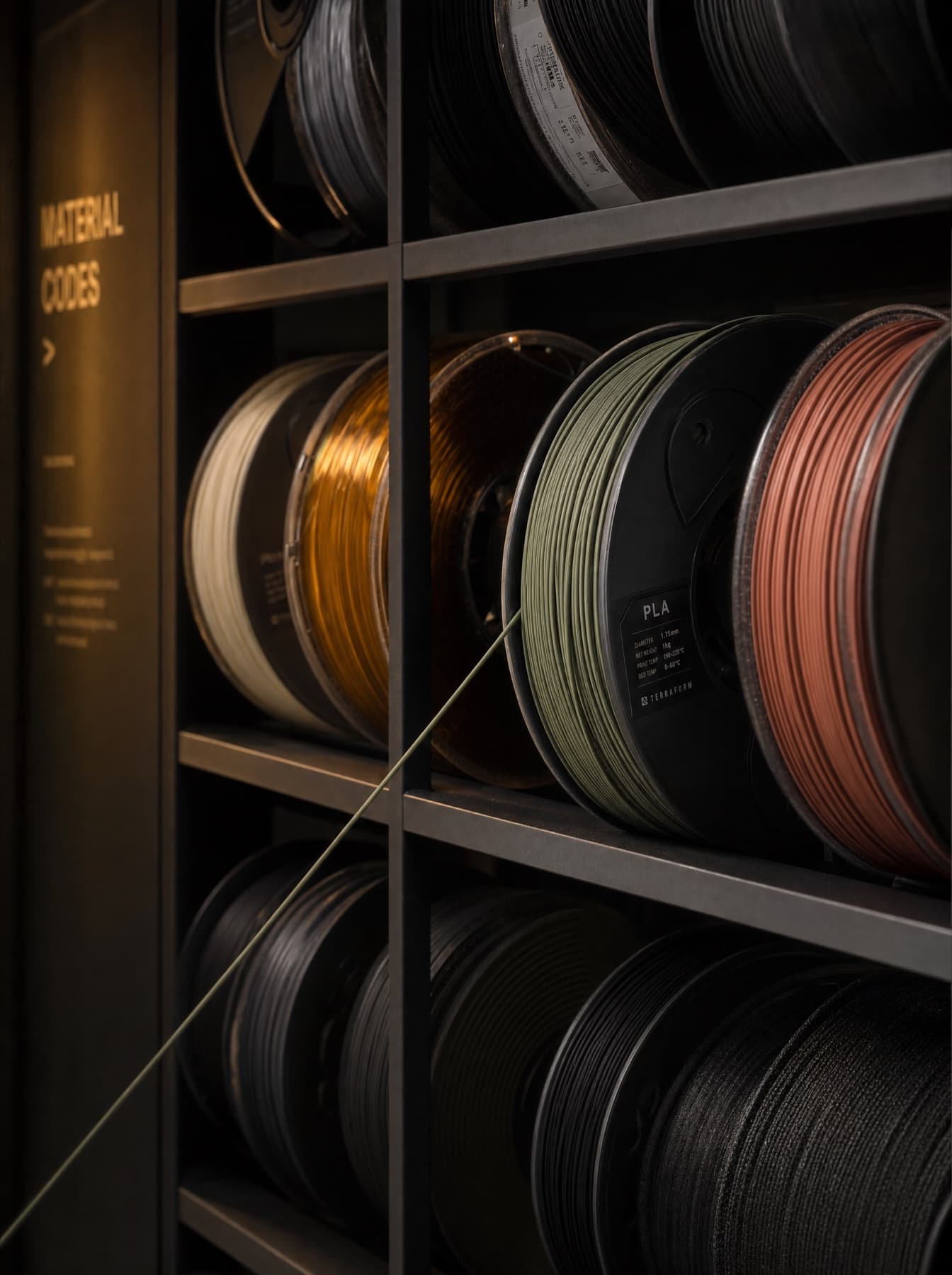
PLA is the easiest to print, the most dimensionally accurate and gives the cleanest surface. It's rigid and plenty strong for décor, models, enclosures and anything that sits on a shelf. Its one serious weakness is heat: in a closed car in summer, or right next to a heat source, it starts to soften. Perfect for objects in a room; a poor choice for anything in the sun or in an engine bay.
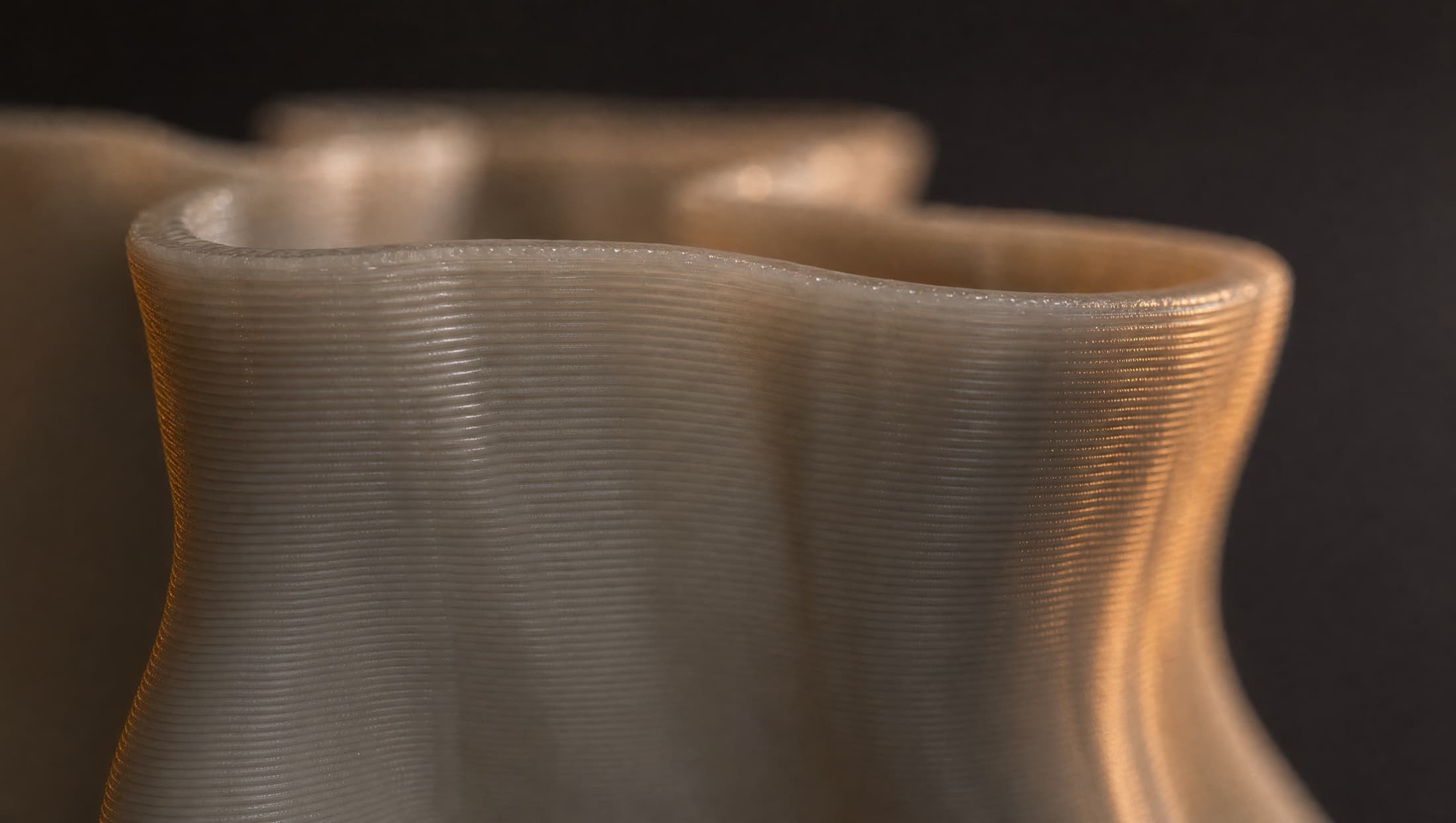
Our lamps are printed in PLA, and that's deliberate: it gives the finest layer texture and diffuses light most beautifully. It's also why they ship with an LED source, which barely warms — an incandescent or halogen bulb would deform the material over time.
PETG — when the part meets the real world
PETG is the middle road: much tougher than PLA, it bends rather than snapping, and it handles moisture and moderate heat. It's the material for brackets, boxes, parts that get assembled and taken apart, things in a bathroom or a workshop. The surface is glossier and slightly less crisp than PLA, but on functional parts that's almost never an issue.
ABS and ASA — heat and the outdoors
ABS takes far more heat than PLA and finishes easily after printing — it sands, drills and bonds with acetone into a genuinely solid joint. ASA is its outdoor cousin: it doesn't yellow or go brittle in sunlight. If a part is going on a façade, on a vehicle, or anywhere under open sky, ASA is the right answer — not PLA painted grey.
Nylon, TPU and carbon composites
Nylon (PA) is for parts that take friction and impact — gears, couplings, hinges. TPU is rubbery and flexible, for gaskets, bumpers and anything that has to give under pressure. Carbon composites (PLA-CF, PETG-CF, PA-CF) add stiffness and hold their shape under load, at the cost of a rougher surface and a higher price.
Polycarbonate (PC) is a case of its own: exceptionally strong and good past 100 °C, but demanding to print and requiring an enclosed chamber. We reach for it when a part genuinely has to survive both heat and impact.
Common questions
- Which material is cheapest?
- PLA, and it's the fastest to print too — which is why it's the default whenever the job allows. PETG is only slightly dearer; ABS, ASA, nylon and carbon composites climb noticeably.
- Is 3D-printed plastic food-safe?
- The raw material can be certified food-safe, but a printed surface has microscopic grooves between layers where bacteria sit. For anything touching food we recommend a sealing coat, or restricting it to dry, short-contact use.
Where to next
Got a project in mind?
Describe what you need and we'll come back with an estimate and a date within 24–48h.
Request a quote