How much does 3D printing cost?
The question we get most often, and the only one without a single answer. Here's what really goes into the price — and what you can change before you send the model.
6 min read·
The three things you're paying for
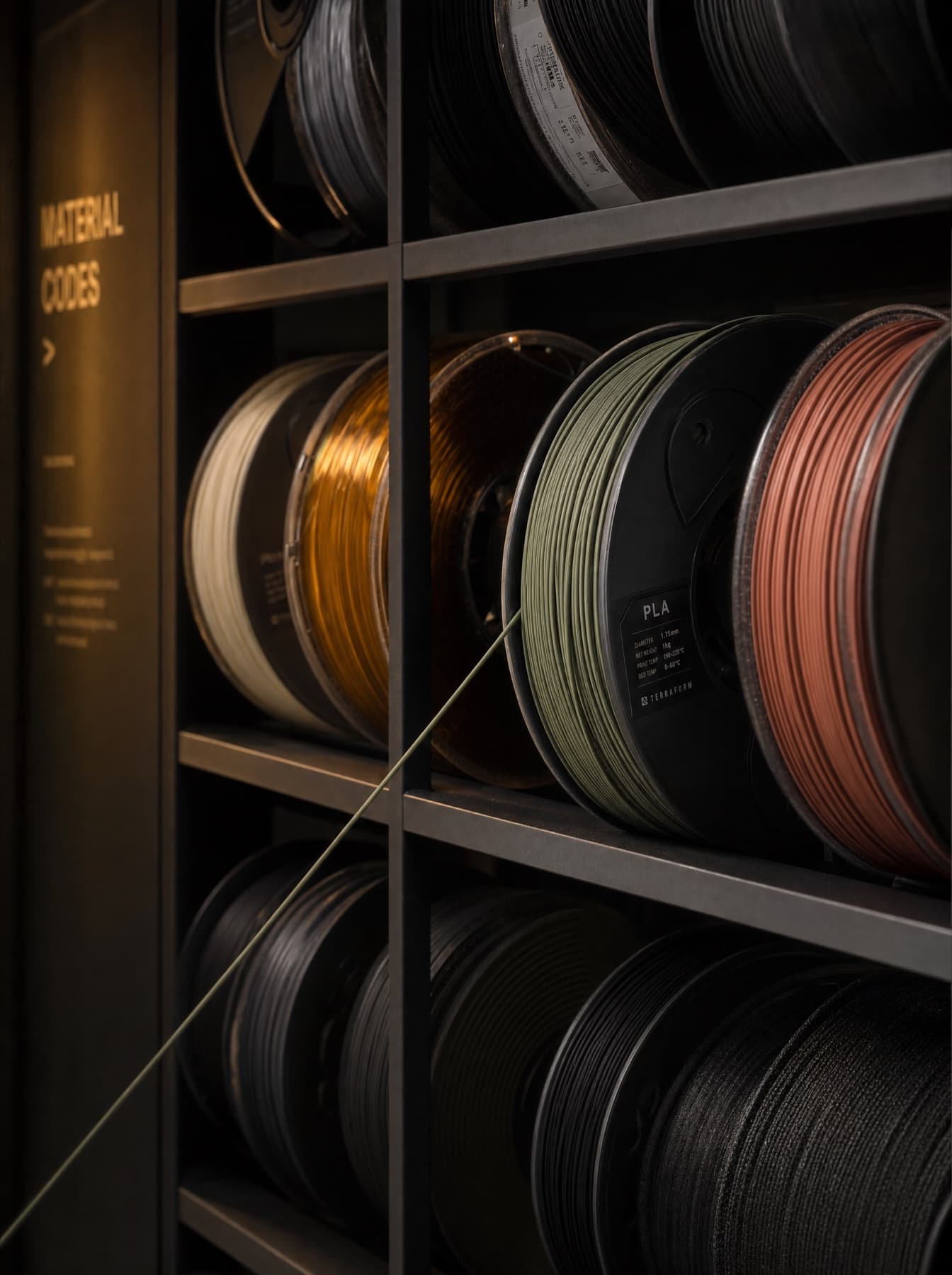
The price of any 3D-printed part comes down to three things: how much material it uses, how many hours it occupies a machine, and how much handwork it needs afterwards. Material is measured in grams, not centimetres — which is why a hollow 30 cm vase is often cheaper than a solid block the size of your fist.
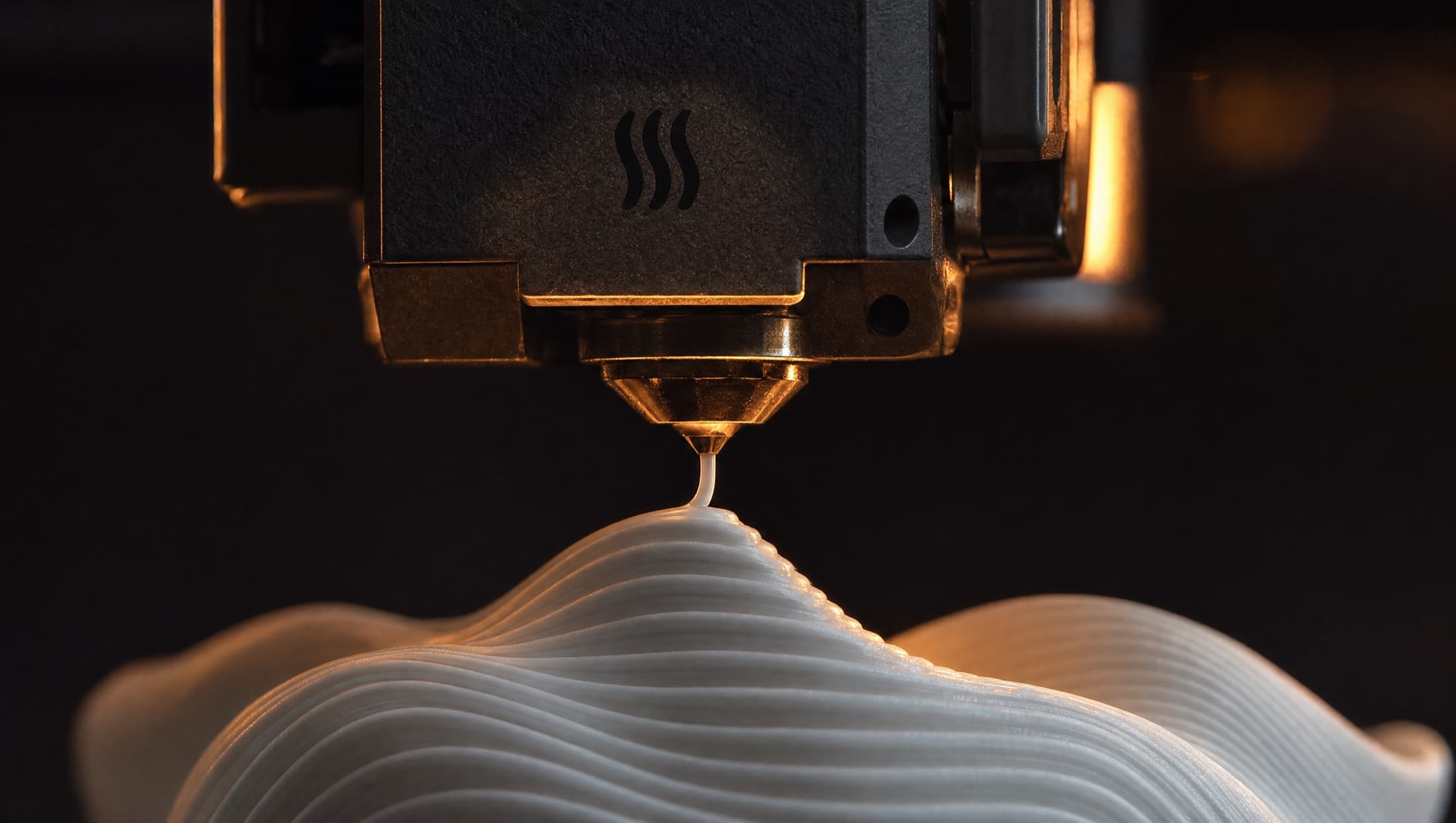
Machine time is usually the biggest line. A printer runs for hours, sometimes days, and while it does it can't do anything else. Two parts using the same amount of plastic can therefore cost very differently if one takes ten hours and the other thirty.
Why the same model can have two prices
Infill is the first lever. A part doesn't need to be solid — the inside prints as a lattice, and the difference between 15% and 50% can halve both material and time. For decorative pieces low infill is plenty; for a part carrying load it isn't.
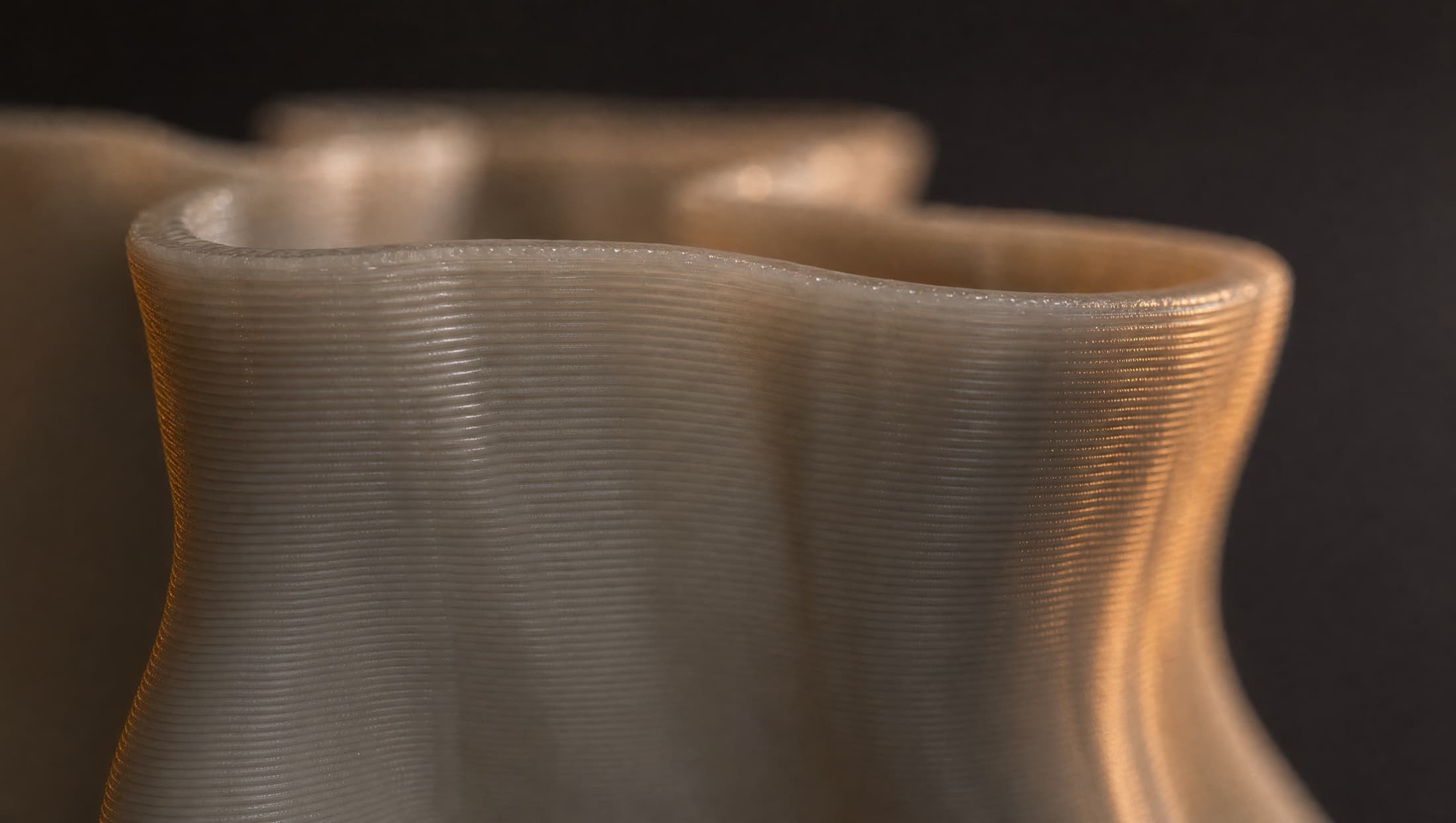
The second is orientation on the plate. The same part turned another way can need half the support, and support is pure waste: it eats material, lengthens the print and has to be removed by hand, which costs again. The third is layer height — thicker layers print faster but are visible. On a technical part that doesn't matter; on a part people look at, it does.
Series are much cheaper per piece
Preparation — checking the geometry, orientation, settings, a test print — is paid once whether you print one piece or three hundred. On a single piece that setup carries the whole price; across a run it spreads out, and the per-piece cost falls back to material and time. Which is why ten pieces almost never costs ten times what one does.
How to get a lower price
Tell us what the part is for, not just what it should look like. If we know a piece is hidden and carries no load, we can drop the infill and thicken the layers and the price falls with no downside at all. If it has to be strong, paying more beats receiving a part that snaps — and that call can only be made if you tell us the job.
Second: split a large piece where you can. Anything bigger than the build volume has to be split anyway, and smaller parts print in parallel across several machines and finish sooner. Third — if you're not in a hurry, say so. A job that can wait for a free slot is always cheaper than one that has to jump the queue.
Common questions
- Can you price it without a 3D model?
- We can give a range from dimensions, purpose and a photo, but an exact price needs the model — the number only appears once the model goes through real preparation. If there's no model, we build one and it goes into the quote.
- Is resin more expensive than FDM?
- Per gram it is, and it needs more post-processing (washing and curing). So it's used where it pays off — small, highly detailed parts. For larger, functional pieces FDM is both cheaper and stronger.
Where to next
Got a project in mind?
Describe what you need and we'll come back with an estimate and a date within 24–48h.
Request a quote